

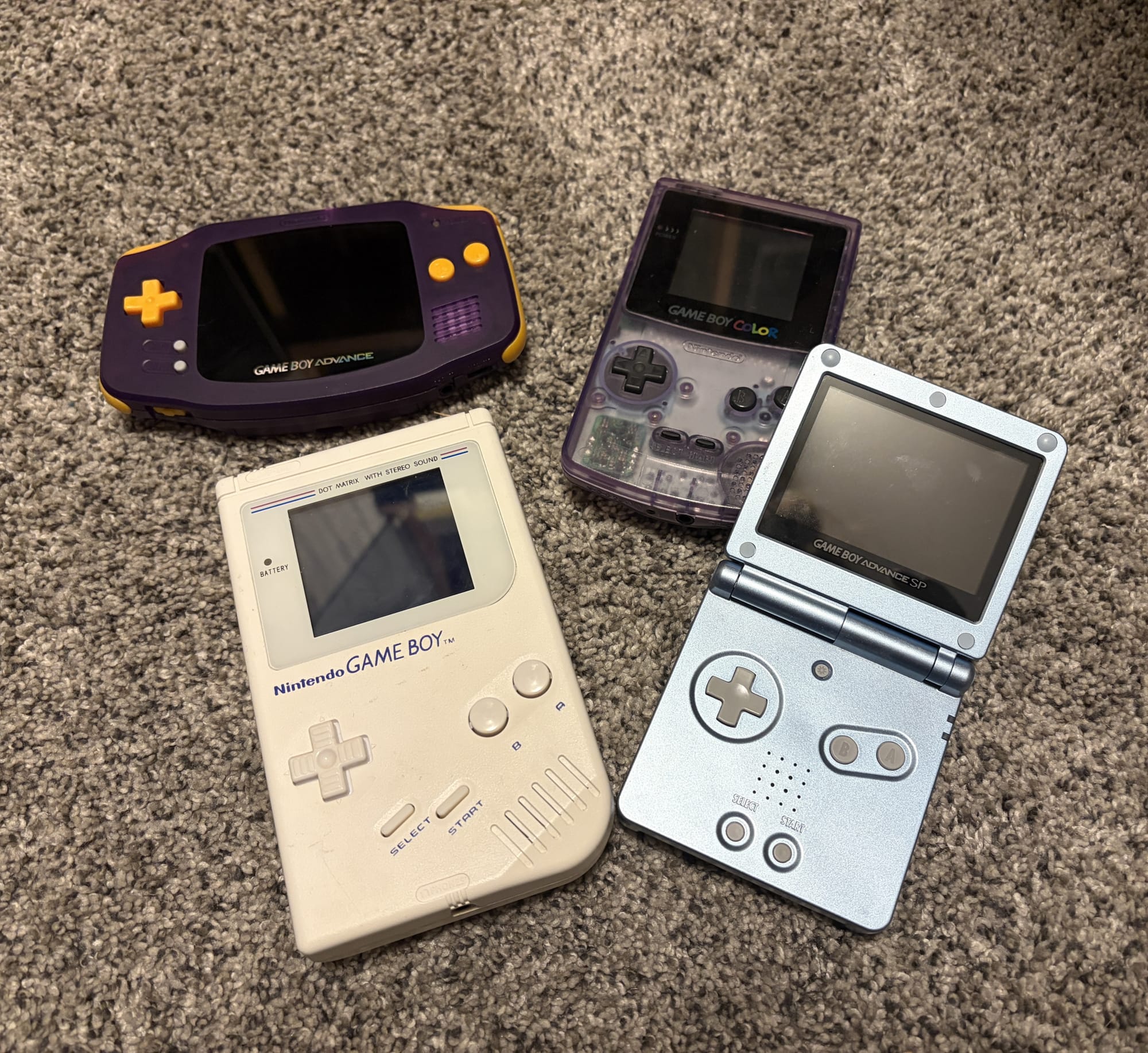
One of my first exposures to video games was in 2005 or so, and it came in the form of a purple GameBoy Color. The Nintendo DS had already been out for a while by that time, and my parents’ response to this fact was to get GameBoy Colors (GBC’s if you’re in the know) for me and my sister off of eBay. The fact that the GameBoys were old (but not yet cool again), and the screens were hard to see, and “C’mooonnn, all our friends have DS’s”, meant that the GameBoys were pretty much immediately in Unc Territory. And, for a while, GameBoys stayed in that space for me: uncool and in a bin somewhere. A relic of a bygone era.
At around 15, I needed a hobby. I broadly liked technology, but didn’t know how to do anything with it. I had built my first PC by then, sure (with an AMD Bulldozer CPU, for some godforsaken reason), but I had no outlet for learning how to mess with electronics. Somehow, I found out about the GameBoy modding scene.
Why GameBoys kinda sorta need modding
A common theme with the GameBoy lineup is that Nintendo is strange and makes strange decisions. From 1989 until 2005, there was a single GameBoy model that came standard with a backlight, and it was only released in limited quantities in Japan. 2003’s GameBoy Advance SP was perhaps the best handheld ever released to that point, but Nintendo beat Tim Cook to the punch by 13 years by omitting a headphone jack. To this day, Nintendo insists on using the (somewhat proprietary) Tri-Wing screw as a “security” measure whose only accomplishment is to make you buy another screwdriver for like $4. It’s an odd company, and I don’t understand it.
Fortunately for us, though, many of these odd decisions can be fixed. With science. AKA modifications (or mods, for short).
The Early Mod Scene
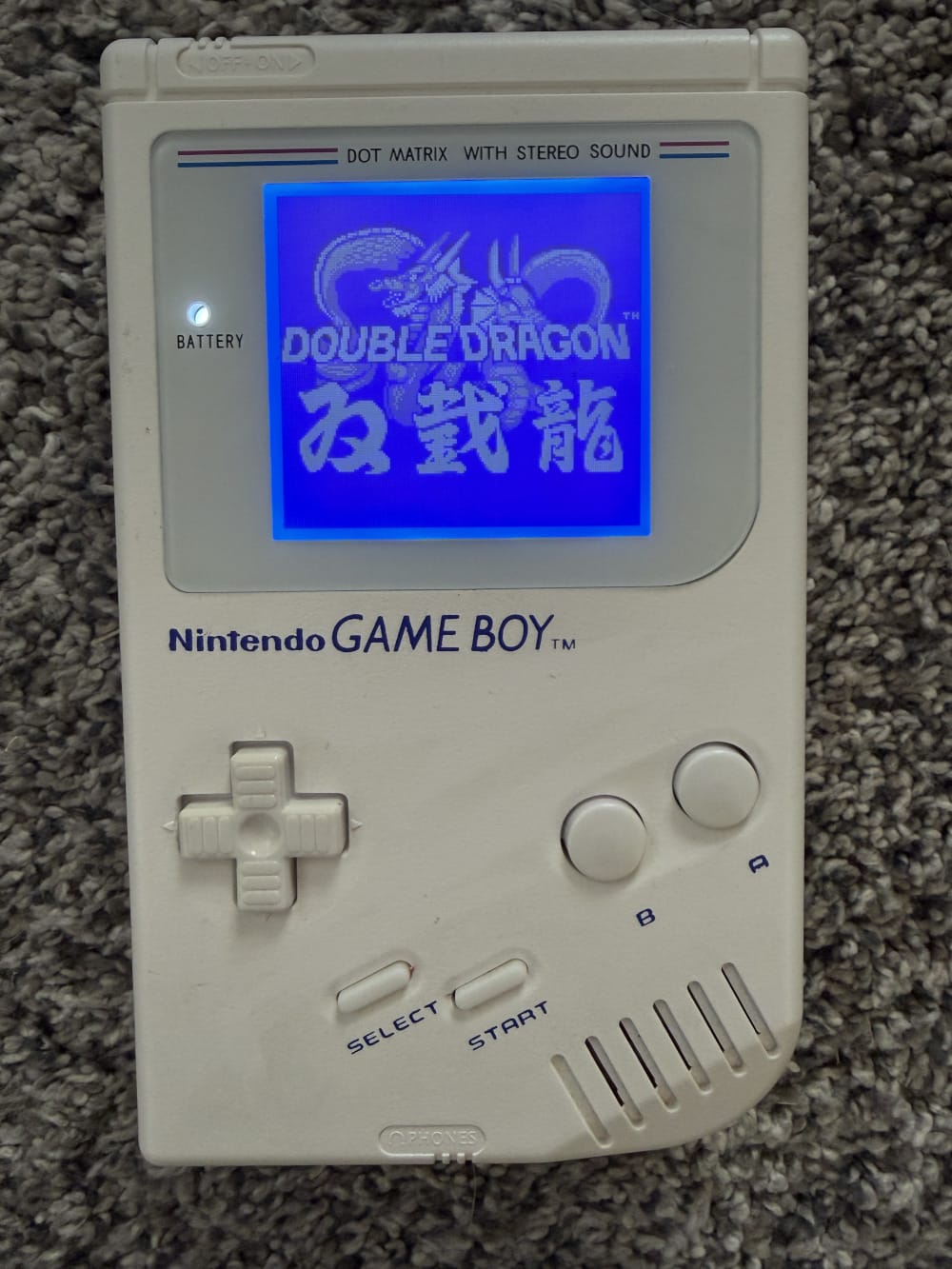
Back then, GameBoy modding was pretty basic, and there weren’t many players making replacement parts. Most mods used parts salvaged from other devices – using the screen from a backlit GameBoy Advance SP in an original GameBoy Advance, for example — and any aftermarket parts you could find on stores like HandHeldLegend didn’t quite fit right.
For my first project, that suited me just fine.
See, I mentioned earlier that the original GameBoys didn’t have backlights. The first (1989) GameBoy had an incredibly dark screen. Like, almost impossible to see, even in broad daylight, dark. This led to an explosion of aftermarket accessories with which to Inspector Gadget your $240 (in today’s money) handheld, just so you could see the game you were playing. By the time I entered the scene, there were a couple fixes for this issue, but the cream of the crop was the backlight + bivert mod.
With these early mods, you were often putting in a majority of the legwork yourself. No one made replacement screens for the original GameBoy at this point, so any modifications had to be on the original hardware. And, I’ll tell you today with ten years of afterthought, that this backlight mod felt like an act of violence inflicted on this poor GameBoy. The first step — the first step — was to remove the polarizing film from the back of the device’s screen with a knife so that the light from the LED backlight module could shine through.
This GameBoy mod felt intrusive. It felt a little wrong. It felt like meddling with something that a certain Japanese toy company was actively trying to keep me out of. And it was so, so, empowering. I ripped, I tore, I installed a backlight, a new shell, and even changed out the power LED for one that matched my new color scheme. I felt like, for once, I had re-made a piece of technology into something truly my own.
Right to Tinker
There’s something about the GameBoy lineup that almost invites modding. The construction is simple – often just two pieces of plastic, held together with screws, that secure a motherboard and a screen in place. Batteries are AA, soldering contacts are generous, and any capacitors or chips are far enough away that you’re not going to seriously risk damaging sensitive components with a simple solder job.
I know that there’s a good reason for this. Computers like the GameBoys really weren’t doing much...well...computing beyond what can be accomplished by a modern graphing calculator. Our phones today are infinitely more compute and storage dense than anything Nintendo was putting out in the early 2000’s. Our phones are also nightmares to repair, held together with glue and gaskets, with tiny ribbon cables and even smaller solder points. Unless you’ve got a full repair shop setup with a $1000+ hot air station, you’re most likely not going to be soldering much on a modern piece of consumer technology. And, I’ll admit it, I mourn the loss of a category of electronics that a fifteen-year-old can learn to tinker on, and that are meant to be taken apart.
I didn’t mod a GameBoy again until this year.
Back Into the Scene
For some context - my sister happens to be famously really into the Pokémon Slowpoke. As in, she’s well on her way to having every Slowpoke card ever printed in any language. In December of 2025, I was in a local retro videogame shop, and out the corner of my eye I saw what my family now lovingly calls “The GameBro”.
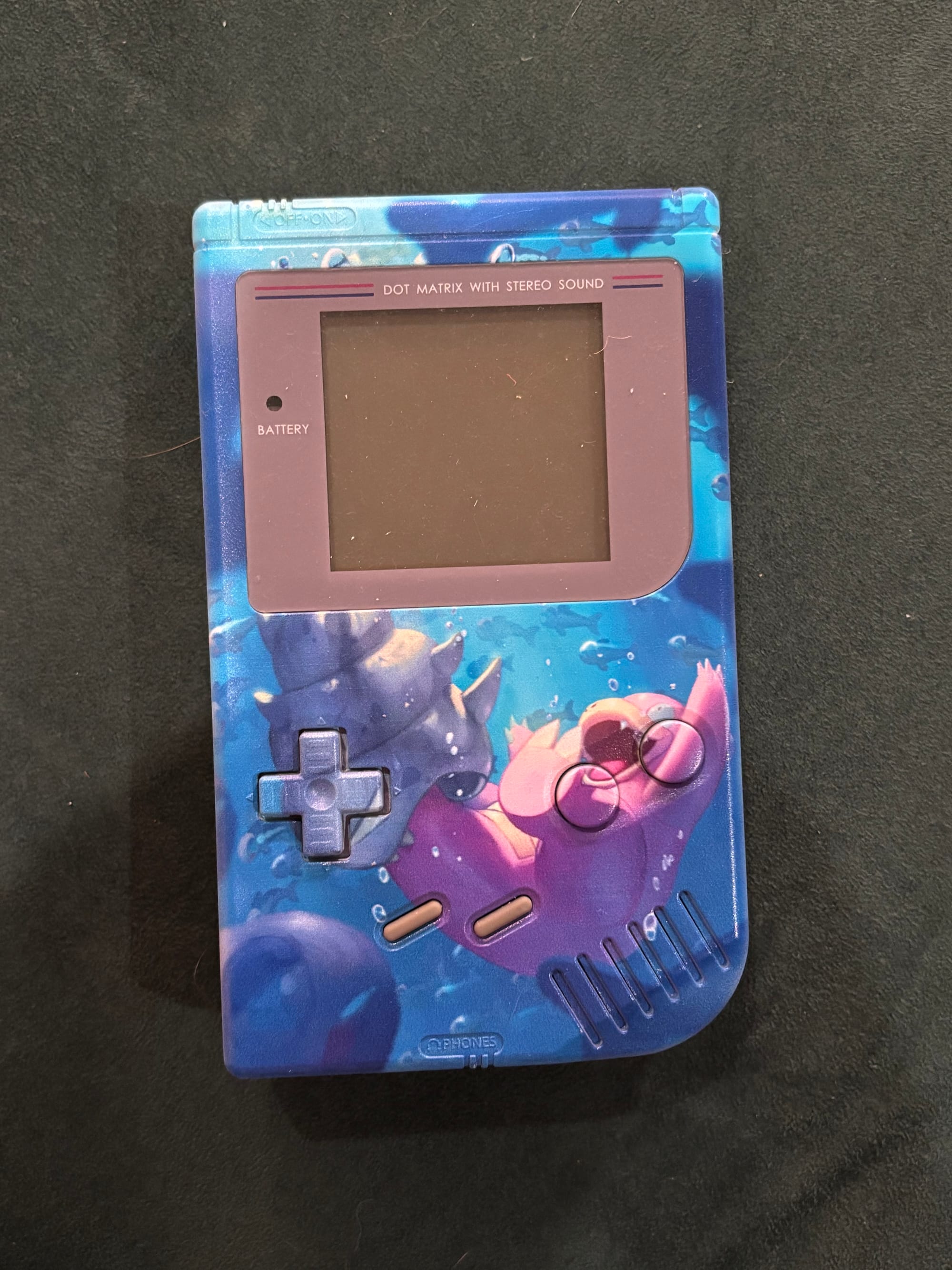
The GameBro comes pre-modded, featuring a backlit screen, rechargable battery, improved sound, and a pre-loaded cartridge containing (quite literally) every original GameBoy game ever made. The main event, however, is a vividly UV-printed case featuring a Slowbro frolicking underneath the ocean’s surface. It being the holiday season, of course I bought the GameBro. And of course my sister spent the next week doing little else but playing through Pokémon Blue.
Seeing the GameBro flipped a switch in my head, and my high school modding memories came rushing back. I started the prep-work for a new project. I would make what I consider to be Peak GameBoy: a backlit original GameBoy Advance.
It turns out, the GameBoy modding scene has been streamlined a lot since my high school days. Gone are the jerry-rigged solutions, needing to manually trim down cases with a dremel to fit new hardware (cases are now readily available pre-trimmed, for most mods). Gone are the days of manually gluing the front glass to an LCD, and modders no longer need to track down overstock of the GameBoy Advance SP’s backlit screens — for a long time the only LCD screens that would work on the original hardware. Screens are now sourced from elsewhere in the electronics supply chain (the one I’m using comes from a Canon EOS M2 camera), and come in easy-to-install solder-free kits. With the right know-how, the swap to a backlit screen can now be done in about 20 minutes.
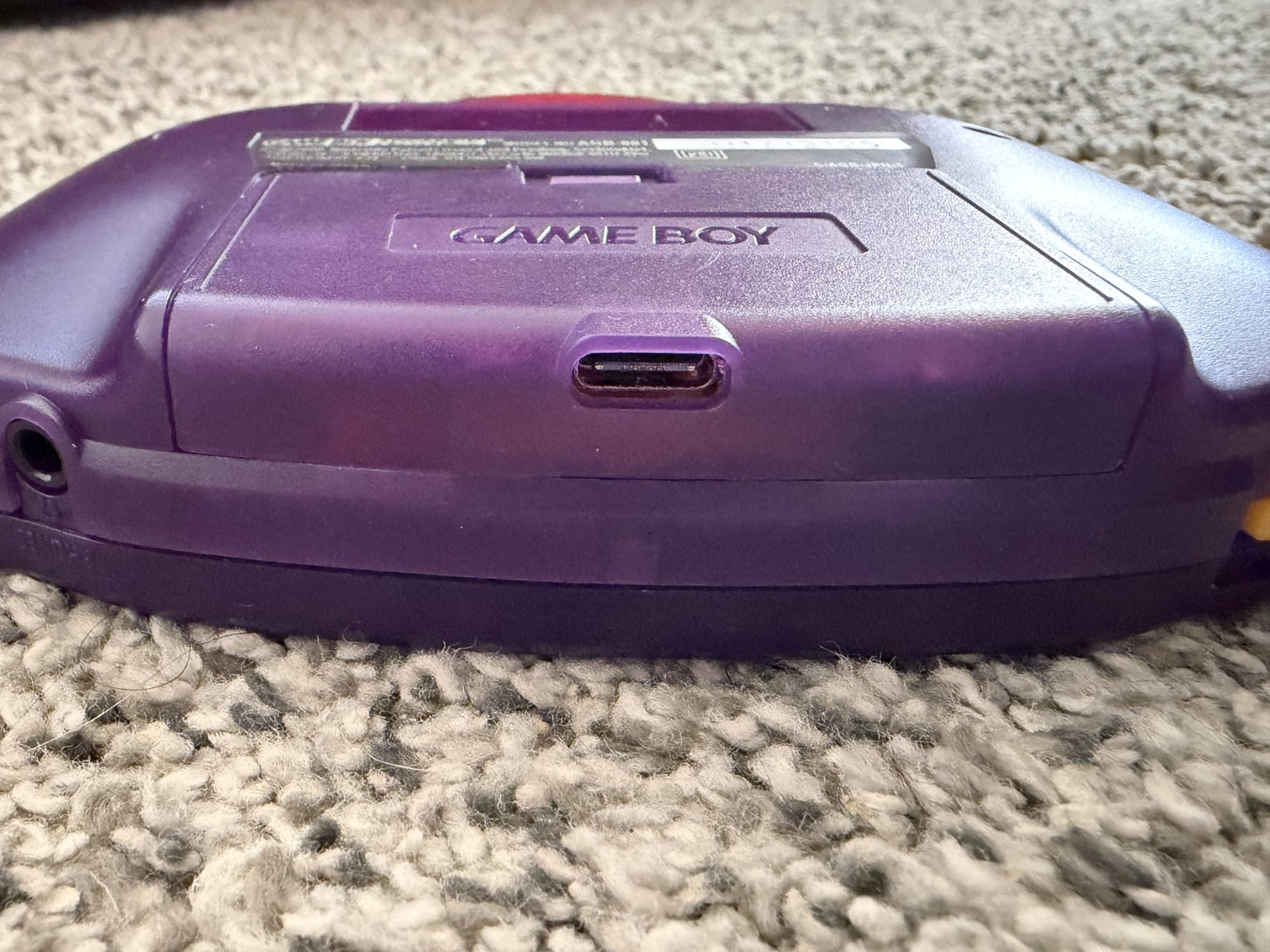
Adding a rechargeable battery was even simpler: the kit that I purchased satisfyingly plops into the handheld’s existing AA battery bay, and a tailor-made back cover featuring a cutout for a USB-C port gives the end product a professional layer of polish.
These developments are unquestionably a win for repairability and moddability for original GameBoy hardware. The hobby is now more accessible than it’s ever been to people of all technical backgrounds — I could probably give one of these kits to a ten-year-old and they would get it up and running in a couple of hours. At the same time, it’s interesting to see the modding scene that I loved so much change with the times. Replacement parts become products in and of themselves, little modular ecosystems that interface with the original hardware. A certain screen mod only works with that company’s aftermarket case. Another requires a specific separate battery kit (sold by the same company) that supplies a slightly different voltage level. The end result is cleaner and much less of a struggle to put together, but also ends up feeling more like assembly than creation. What do you do when (to a certain extent) the struggle was the point?
I Have No Game, Yet I Must Boy
However I felt about the new and streamlined modding experience melted away when I was actually able to use the device I’d assembled. Put simply, these modifications turn the twenty-year-old hardware into something that now feels entirely at home alongside modern electronics. And not only can the Advance play the entire back catalog of pre-existing GameBoy games, I have absolute full confidence that the GameBoy Advance library is one of the best ever created for a handheld. Pokémon Ruby absolutely rips on this thing, and I’m looking forward to diving into Fire Emblem, Advance Wars, WarioWare, Golden Sun, and any other number of killer releases that arrived in that era just before I learned to speak English coherently.
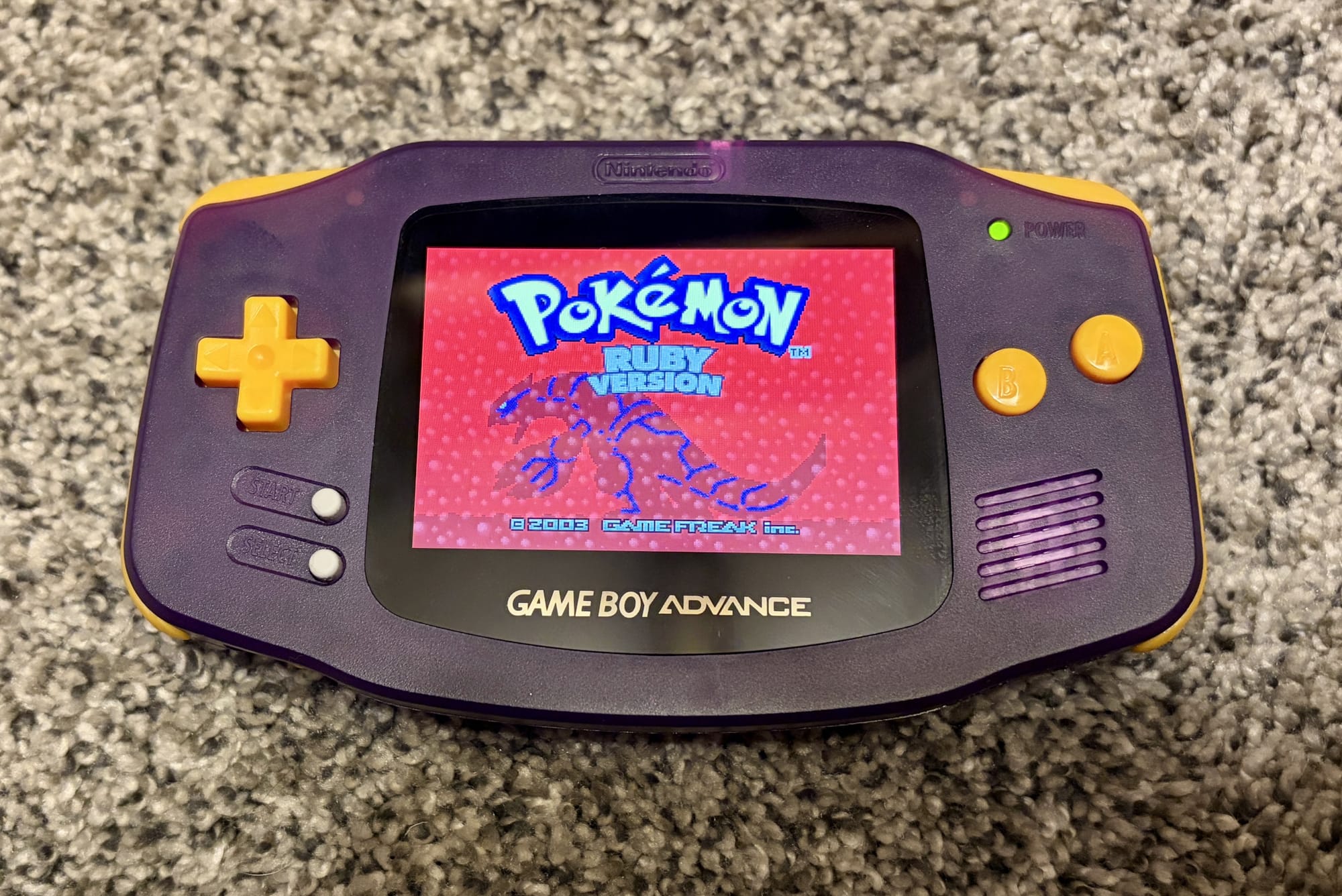
For me, the GameBoy represents something simple that I can throw in my backpack, boot up at a moment’s notice, and grind some wild Pokémon when I have a spare few minutes. If I have a couple of hours, I can lose myself in those same worlds. Most modern gaming devices are big. Most games today demand your full attention at all times. The GameBoy, on the other hand, is small, pocketable, and features games that work great in either short bursts or full marathons. It represents an era before phones were our default whenever we (gasp) didn’t have anything going on at the moment.
I have my own separate thoughts about trends like the analogue bag that use the language of anti-consumerism to tell you to buy lots of stuff. And I’m not telling you to buy a GameBoy. If you want to, go for it. Otherwise, please don’t.
I am, however, inviting you to appreciate the things that we as a society have collectively tossed aside in favor of the new. If I’ve done my job here then just maybe, the next time you run across a twenty-year-old piece of tech collecting dust in a bin in your house, you’ll pick it up and start to tinker. Maybe there'll even be a knife involved at some point.